A visual communication system for Uni-Ubi a bunch of products, translating complex B2B technology into a clear, trustworthy, and product-focused brand presence.
A refreshed visual identity system translating intelligence, connectivity, and scalability into a clean, technology-driven brand language.
Uni-Ubi is an AIoT technology company focused on intelligent construction, spatial intelligence, AI Agents, and smart infrastructure solutions. As the company expands across multiple product lines and application scenarios, the brand requires a more consistent and scalable visual system to support both digital and physical touchpoints.
This project explores a refreshed visual identity system for Uni-Ubi, translating the company's focus on intelligence, connectivity, and environmental interaction into a clean, technology-driven brand language. The final system includes logo usage, color palette, typography, graphic elements, stationery, packaging, merchandise, environmental graphics, and promotional applications.
The visual identity needed to communicate three key qualities. The logo had already been finalized, this project focused on creating derivative designs that extend its language across every brand touchpoint.
The overall visual tone is clean, modern, and structured, balancing corporate credibility with a sense of movement and innovation.
Reflecting the company's AI-driven technology foundation.
Showing the relationship between people, devices, data, and environments.
Allowing the system to work across digital platforms, packaging, office spaces, signage, and marketing materials.
The color palette centers on a range of blues, supported by white, light gray, and dark neutral tones. The primary blue creates a strong technology association, while lighter gradients and wave layers add depth and flexibility.
The system is designed to work across both high-contrast applications, such as black packaging and digital screens, and lighter corporate materials like stationery, signage, and printed documents.
The wave graphic is the core visual asset of the system.
Uni-Ubi's logo originates from a Möbius loop, one continuous surface with no start or end, symbolizing infinite, ubiquitous connection. The wave graphic translates that endlessness into a flowing form, appearing across packaging, signage, and digital surfaces as the brand's signature.
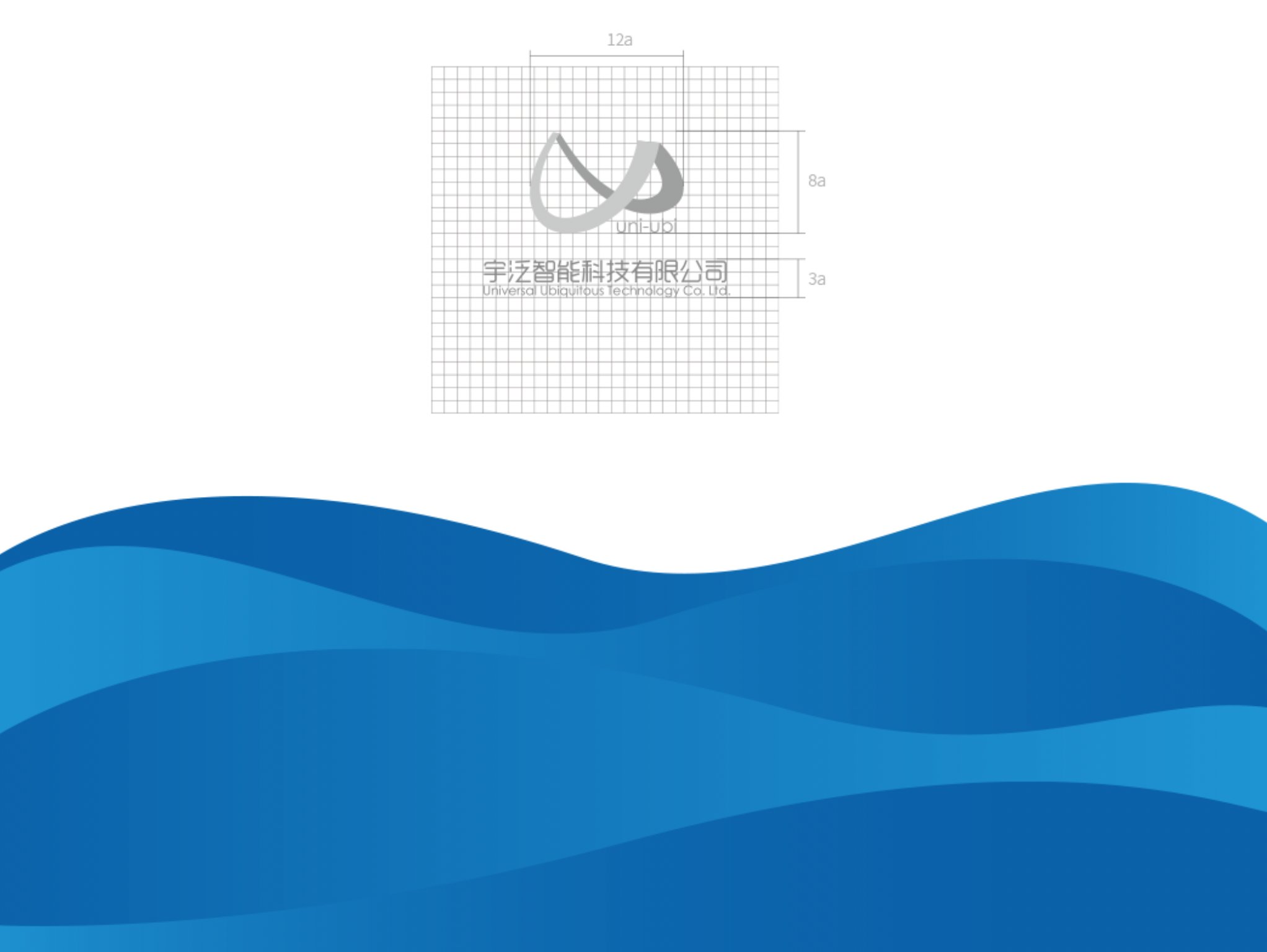
The identity system was applied across a range of touchpoints to test consistency and flexibility, from print collateral and packaging to apparel, signage, and environmental graphics.
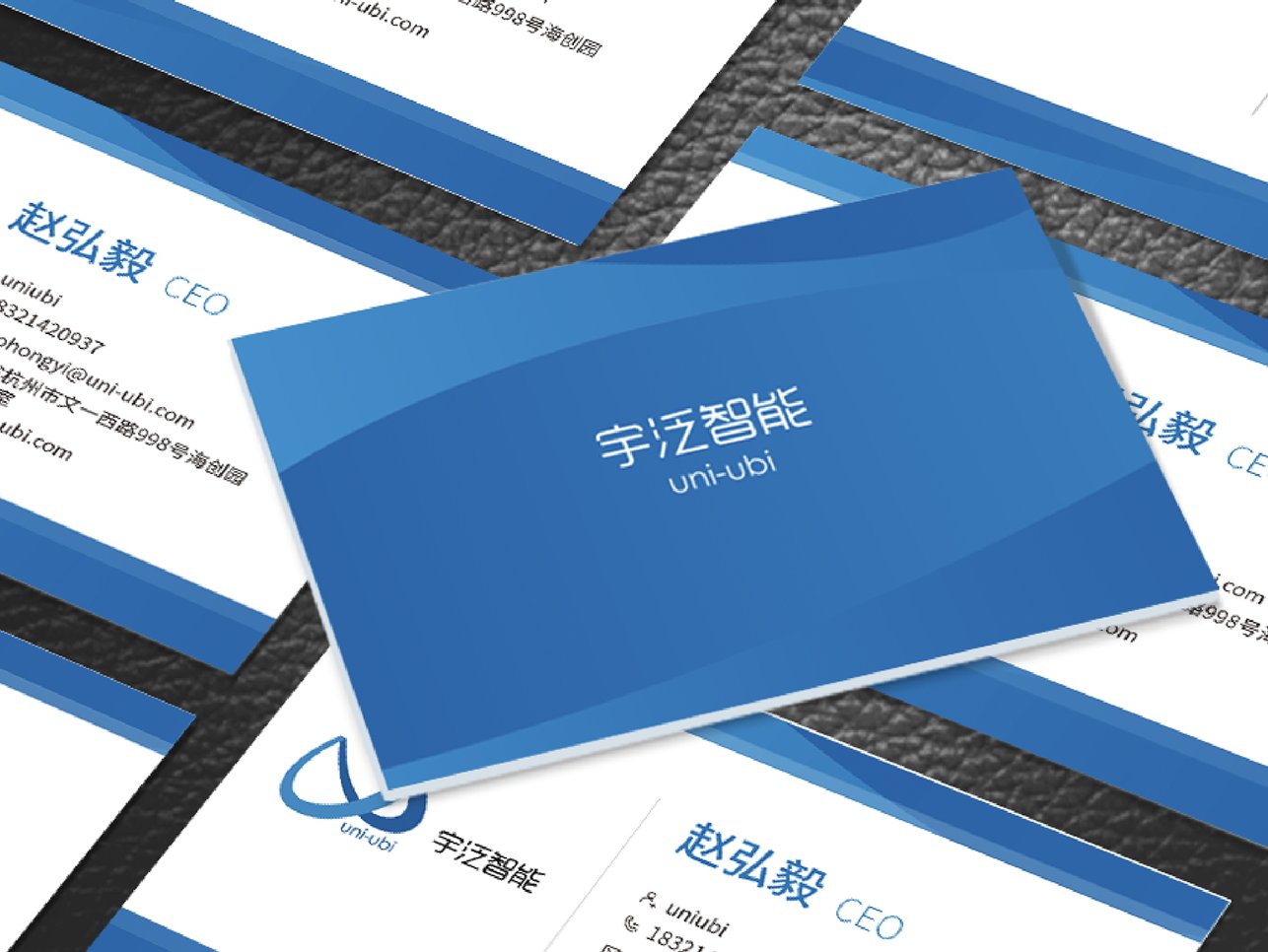
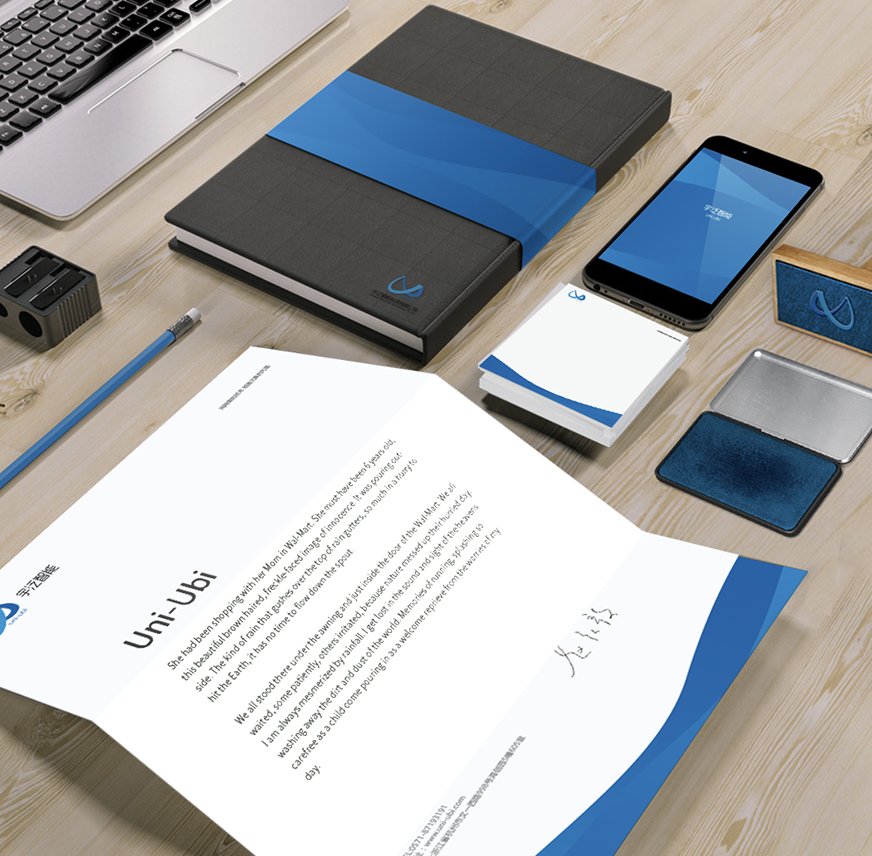
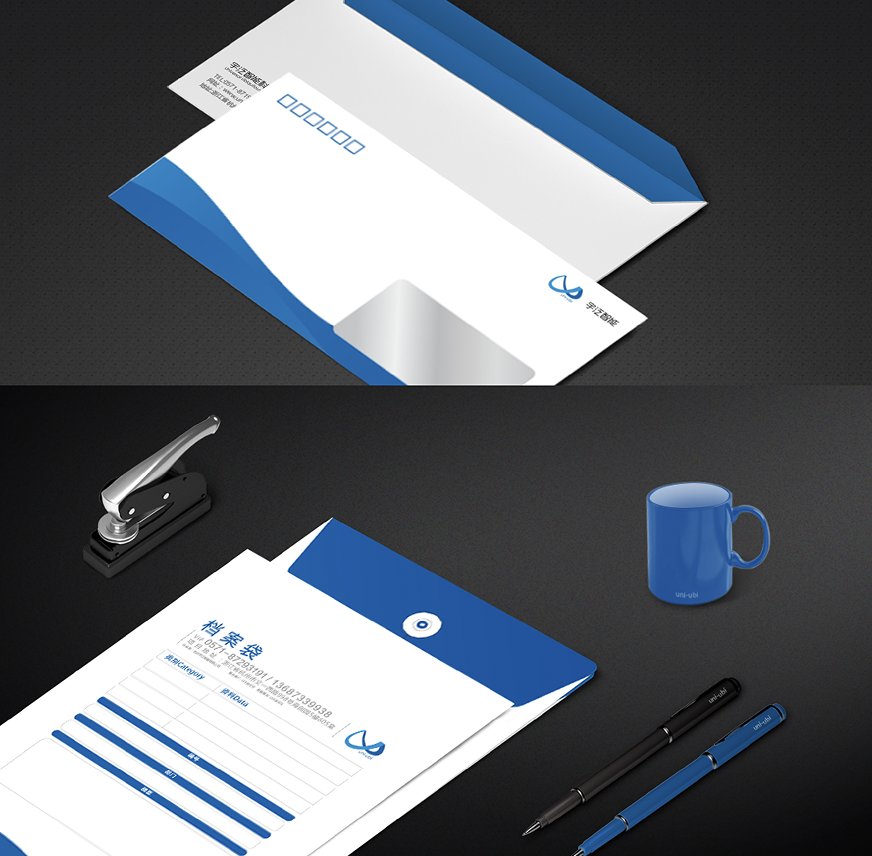
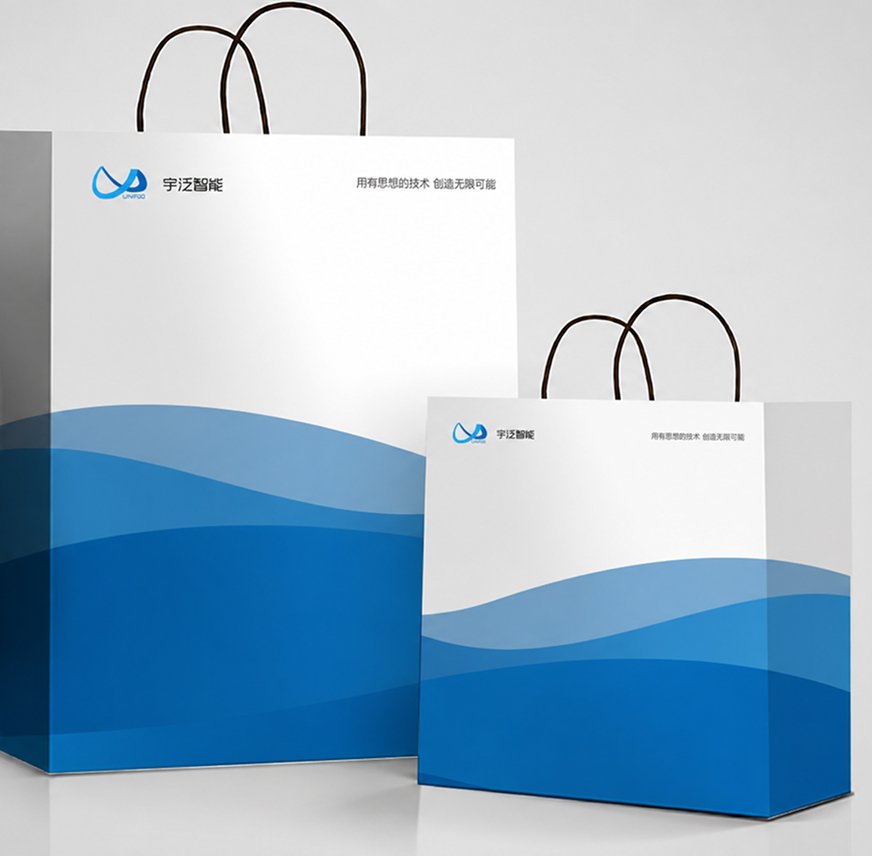
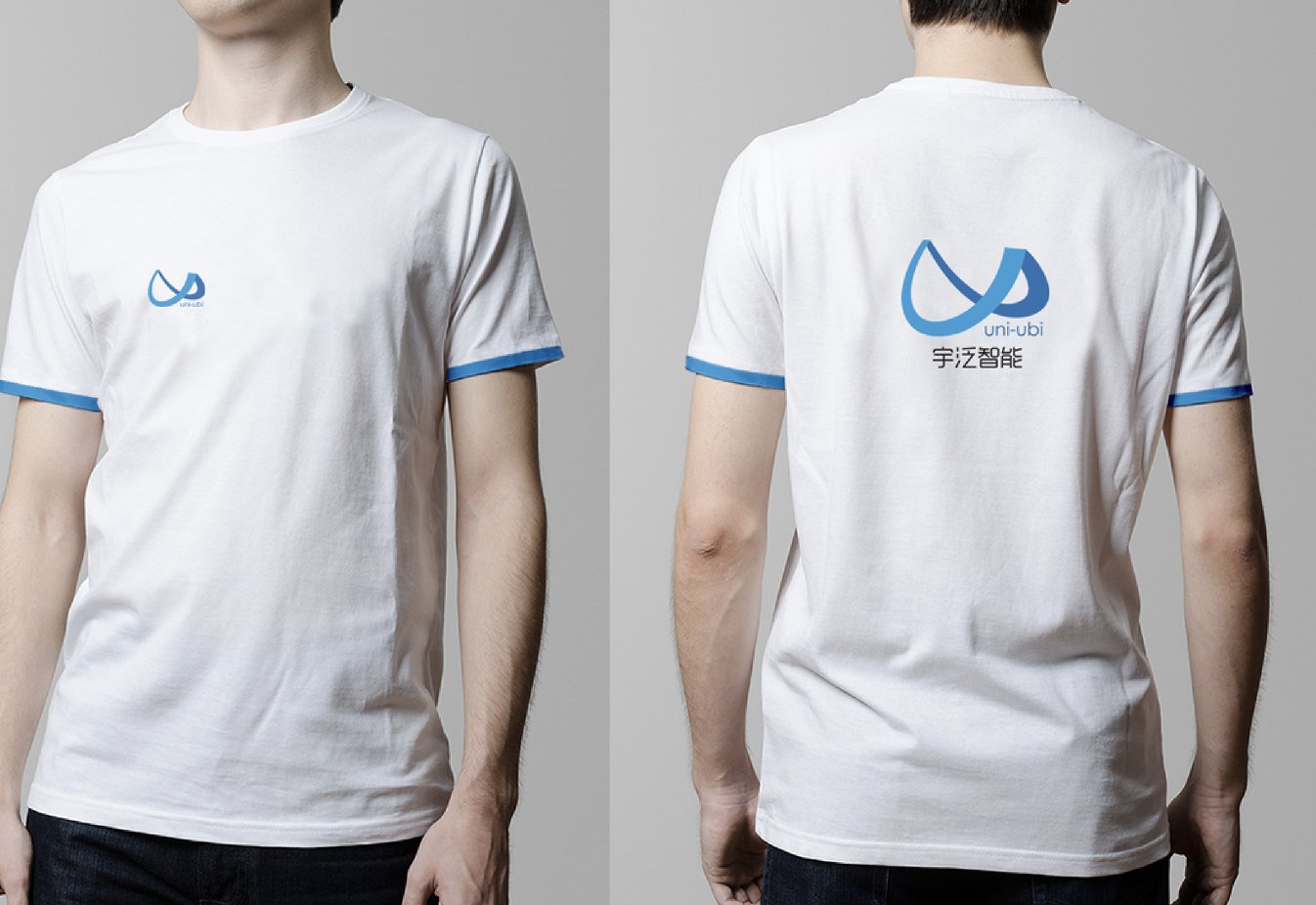
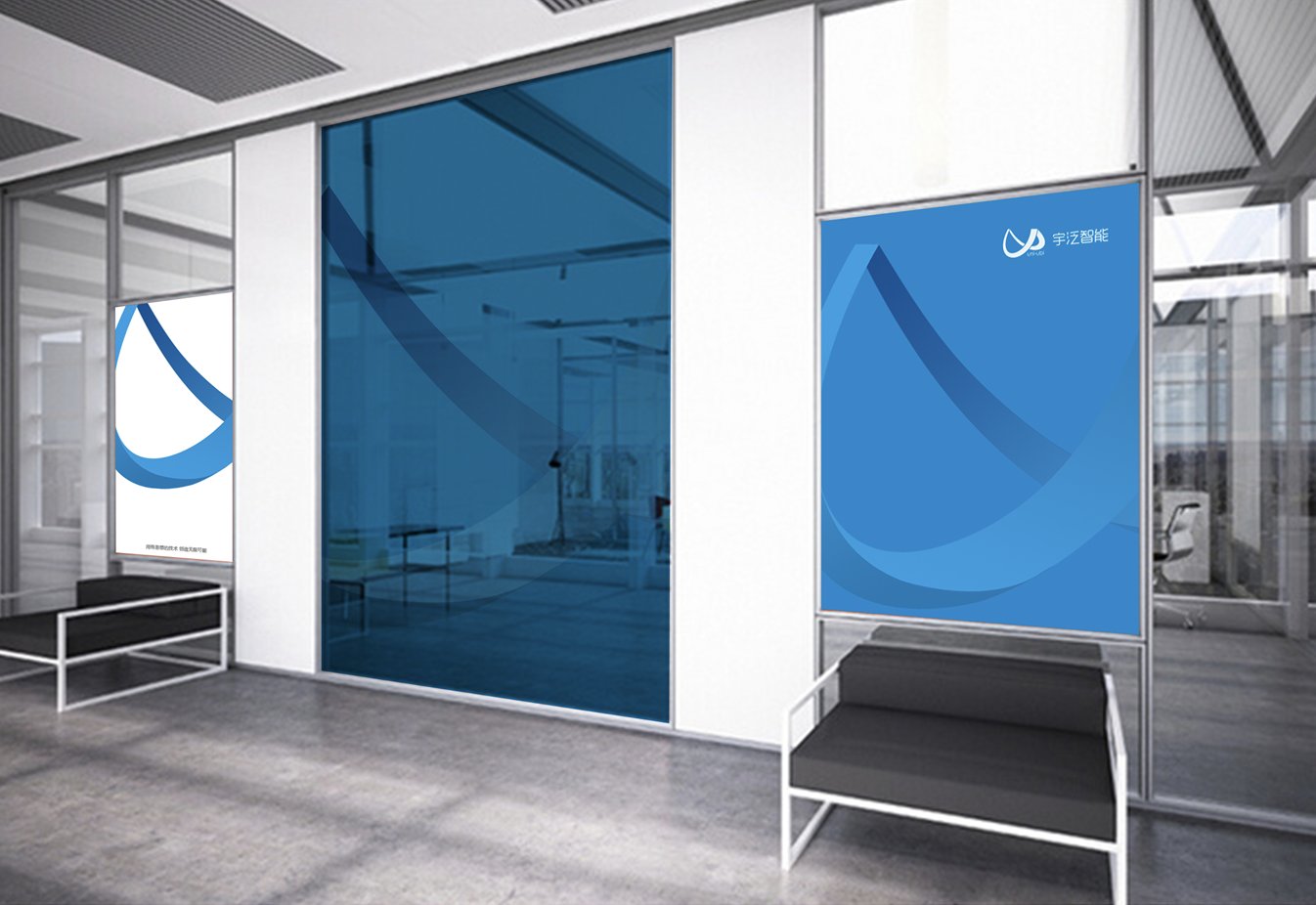
By combining a structured logo system, a consistent blue palette, flexible wave graphics, and clean application rules, the brand becomes easier to recognize at every scale, from a business card in hand to a billboard across a city block.
A corporate-website design project, reorganizing information architecture and rebuilding the landing-page system to make Uni-Ubi's products, technologies, and scenarios easier to navigate.
This was a new project. Uni-Ubi needed a clearer, more structured official website to communicate its business scope, product ecosystem, core technologies, and scenario-based solutions.
The work focused on reorganizing the site's information architecture and upgrading the landing-page visuals — building a more professional, technology-driven, and user-friendly brand experience.
Over time, the company has gradually expanded to encompass an increasingly diverse range of content—including products, use cases, core technologies, corporate information, and media resources. The challenge lies in integrating these complex categories into a clearer structure while maintaining a clean, credible, and technology-focused visual style.
The site needed to present multiple product lines, technology capabilities, and business scenarios without overwhelming users.
Key sections such as products, scenarios, and core technologies needed a stronger hierarchy and clearer entry points.
A consistent style was required across hero banners, product pages, solution pages, and supporting visuals.
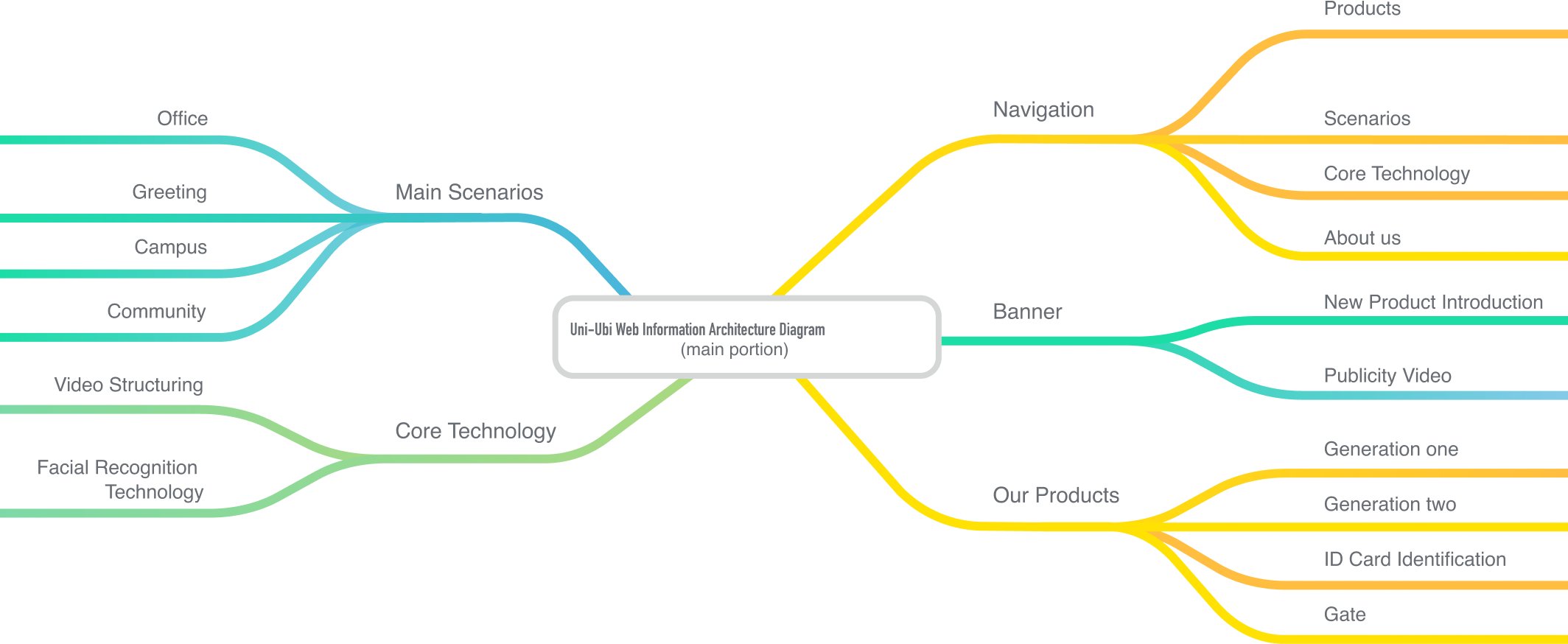
To improve clarity, I reorganized the website's content into four major layers — main scenarios, core technology, navigation, and product introductions. This structure defined what users should see first, and how they could move from general brand information to specific product or solution pages.
The visual direction was built around four qualities: efficient, technological, friendly, and reliable. To translate these into form, I explored clean layouts, geometric structure, soft gradients, light backgrounds, and technology-related imagery.
Agile, fast, direct.
Geometric, futuristic, useful.
Rounded, soft, approachable.
Stable, balanced, trustworthy.



The homepage introduces the company's positioning and guides users toward key business sections.
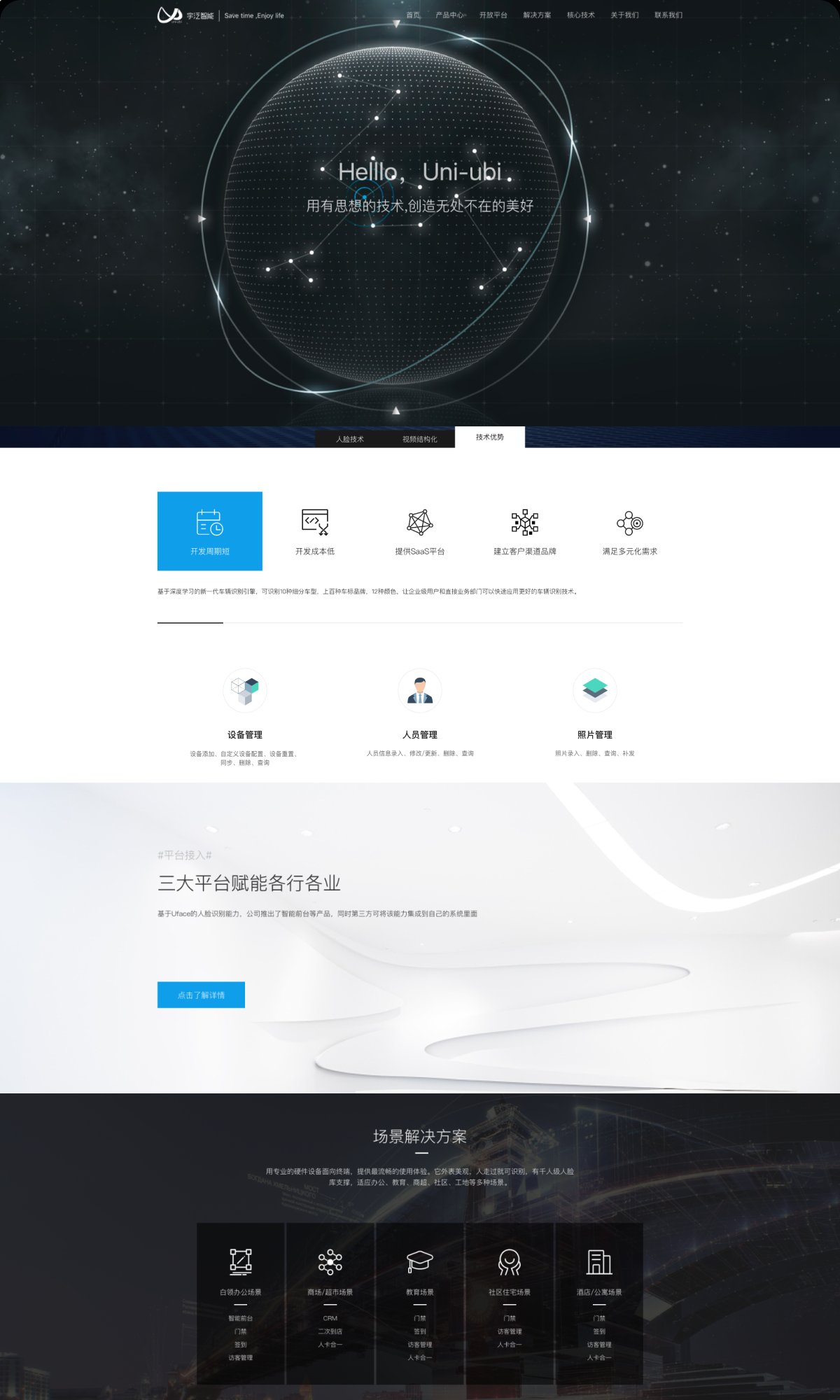
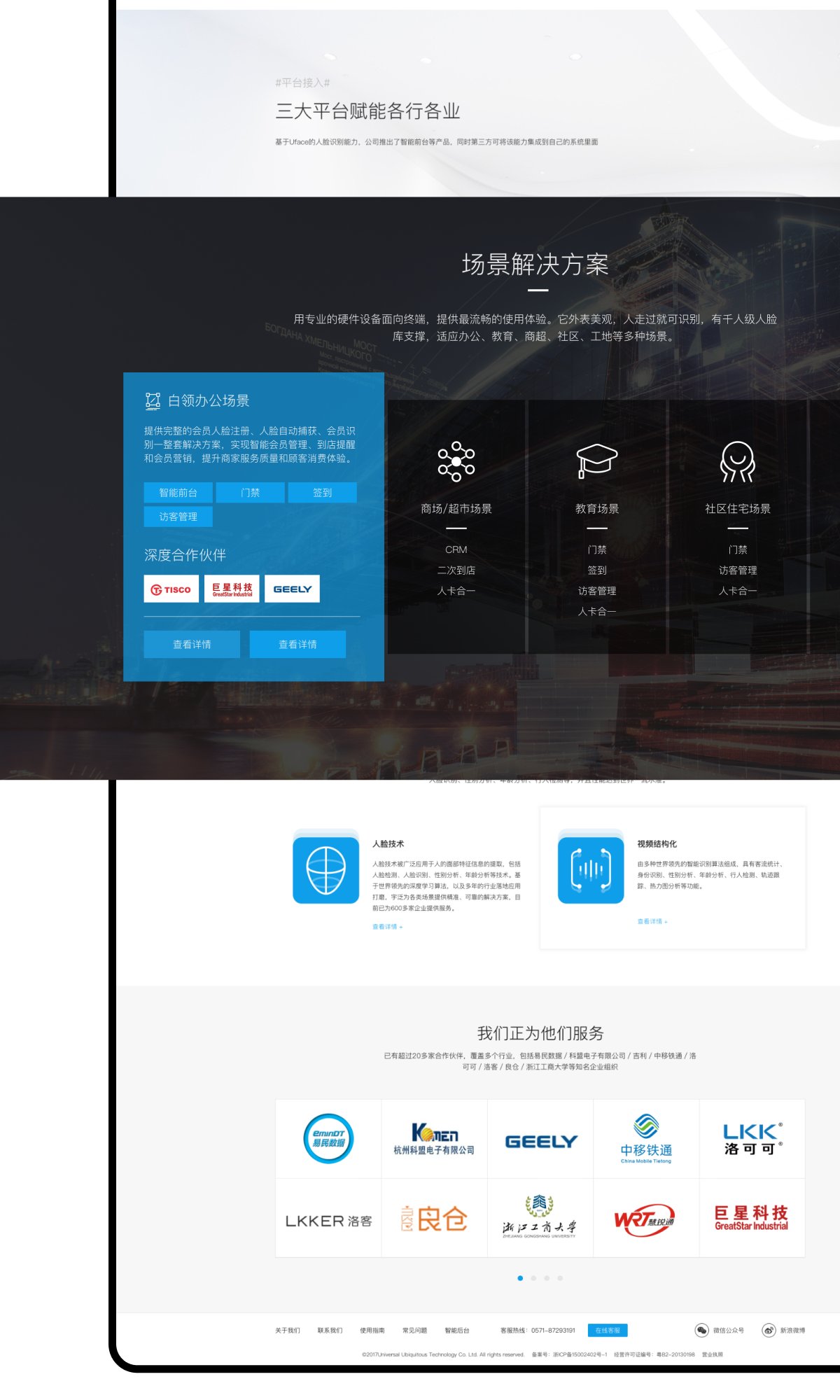
Product pages use larger visual modules to highlight hardware, software, and platform capabilities.
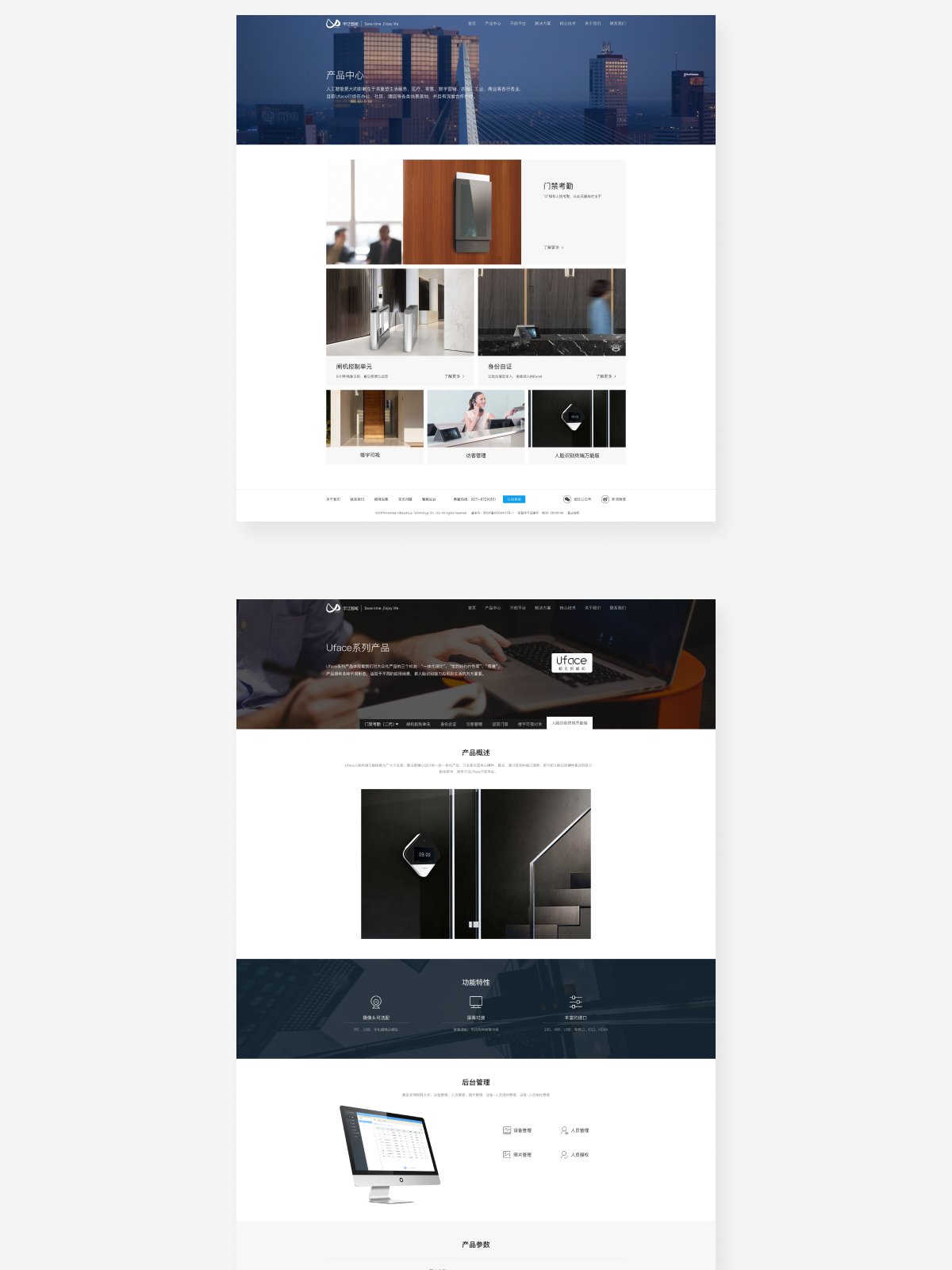
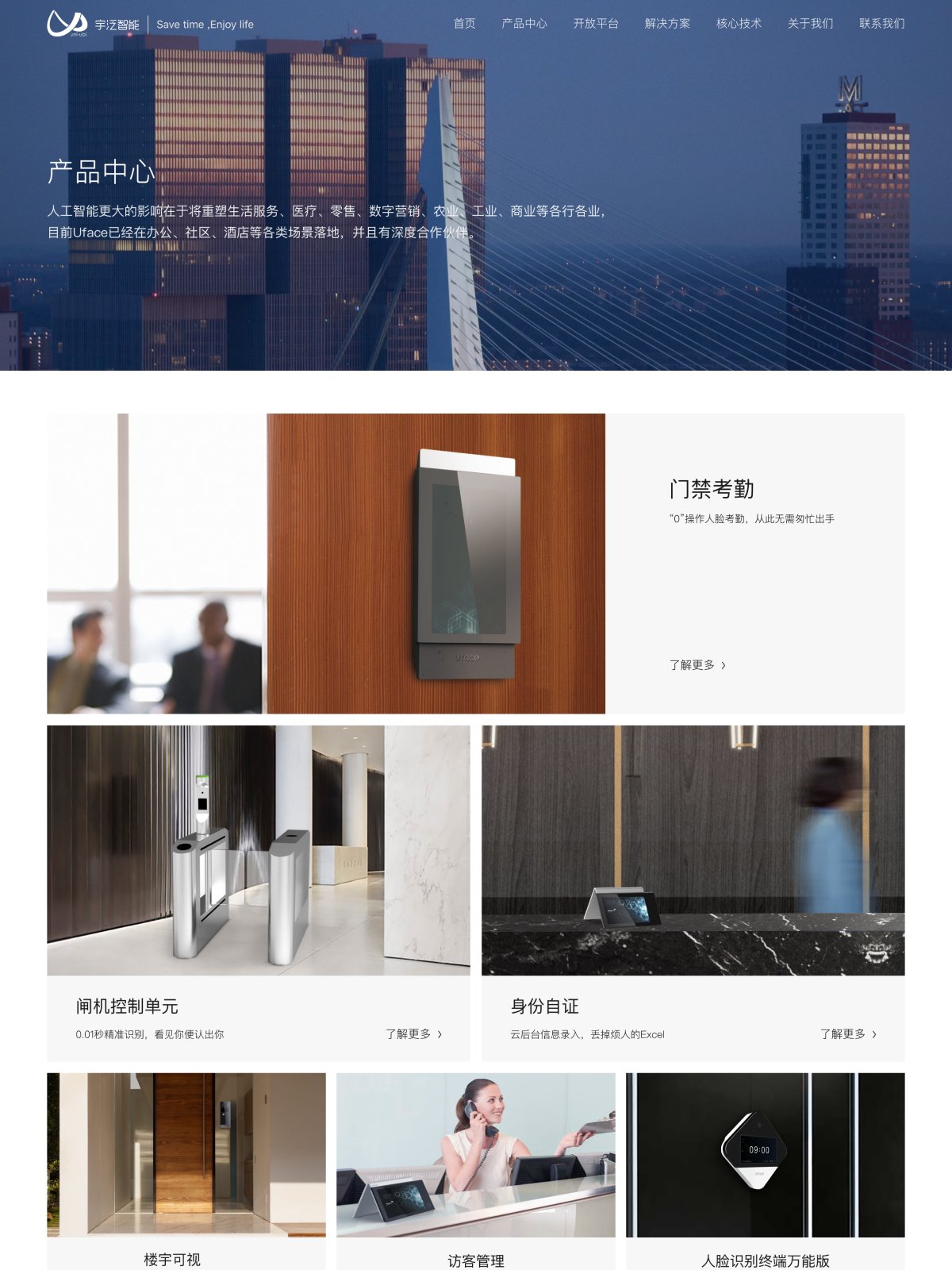
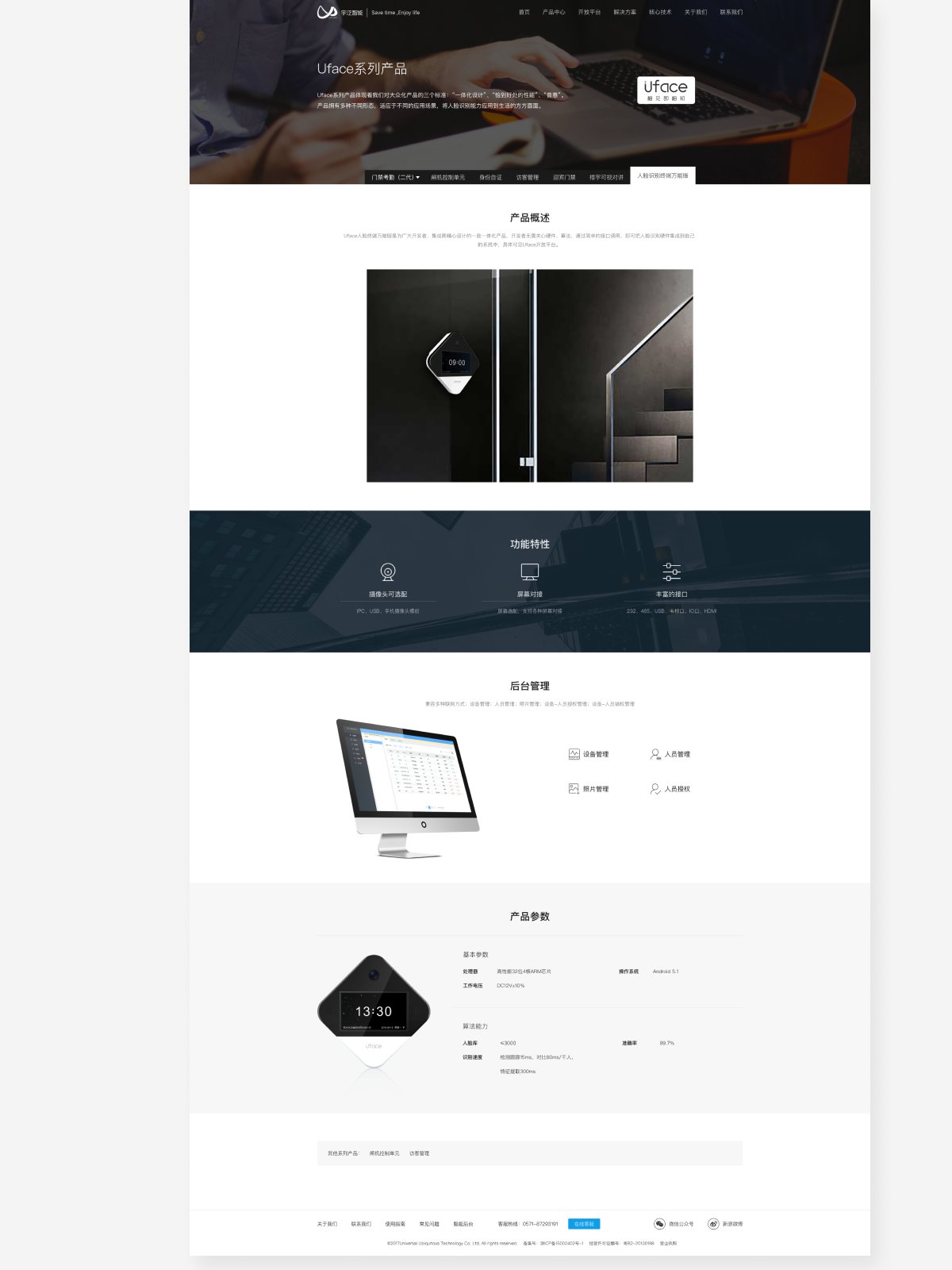
Solution pages organize industry-specific content into clearer service scenarios.
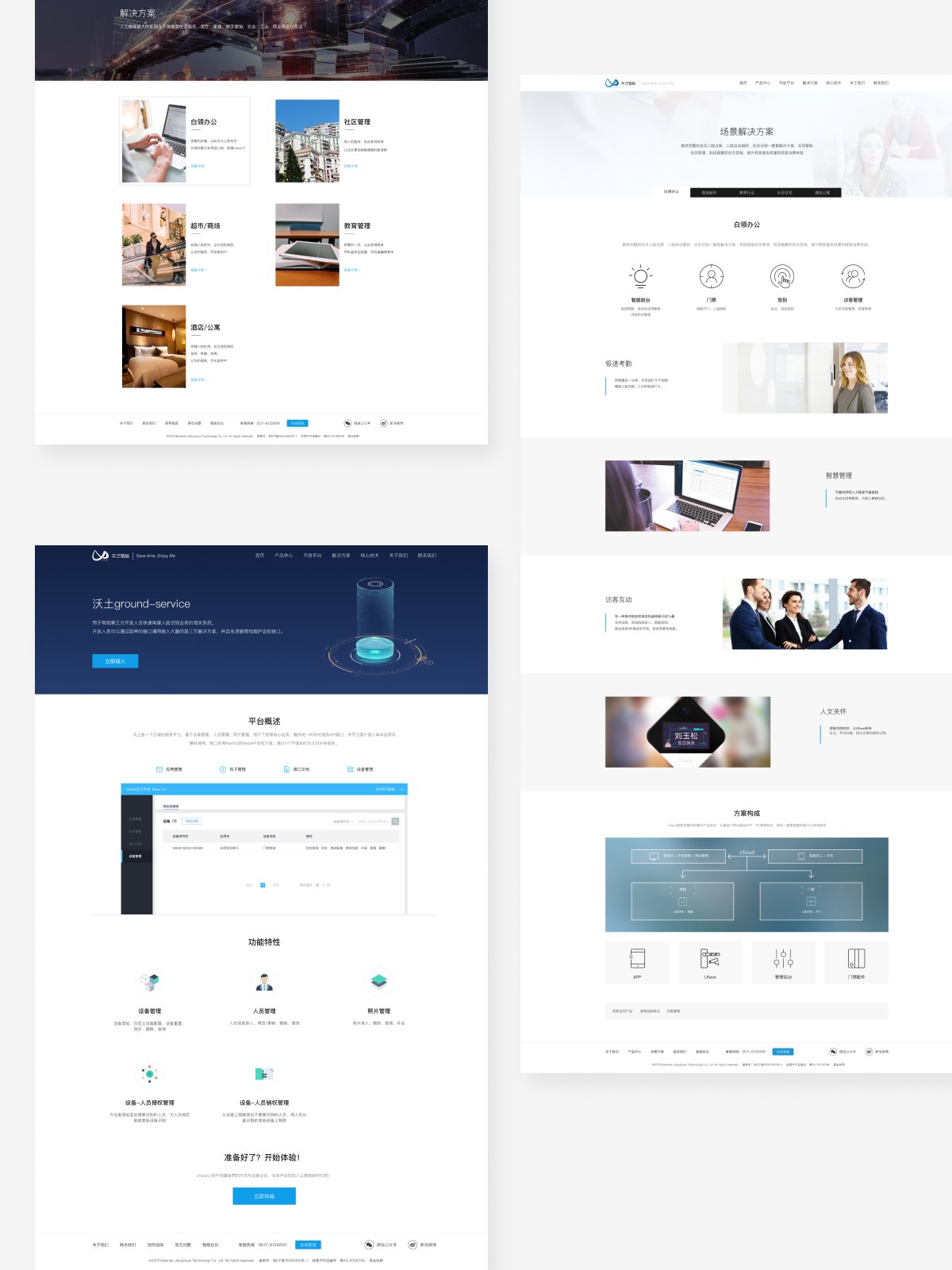
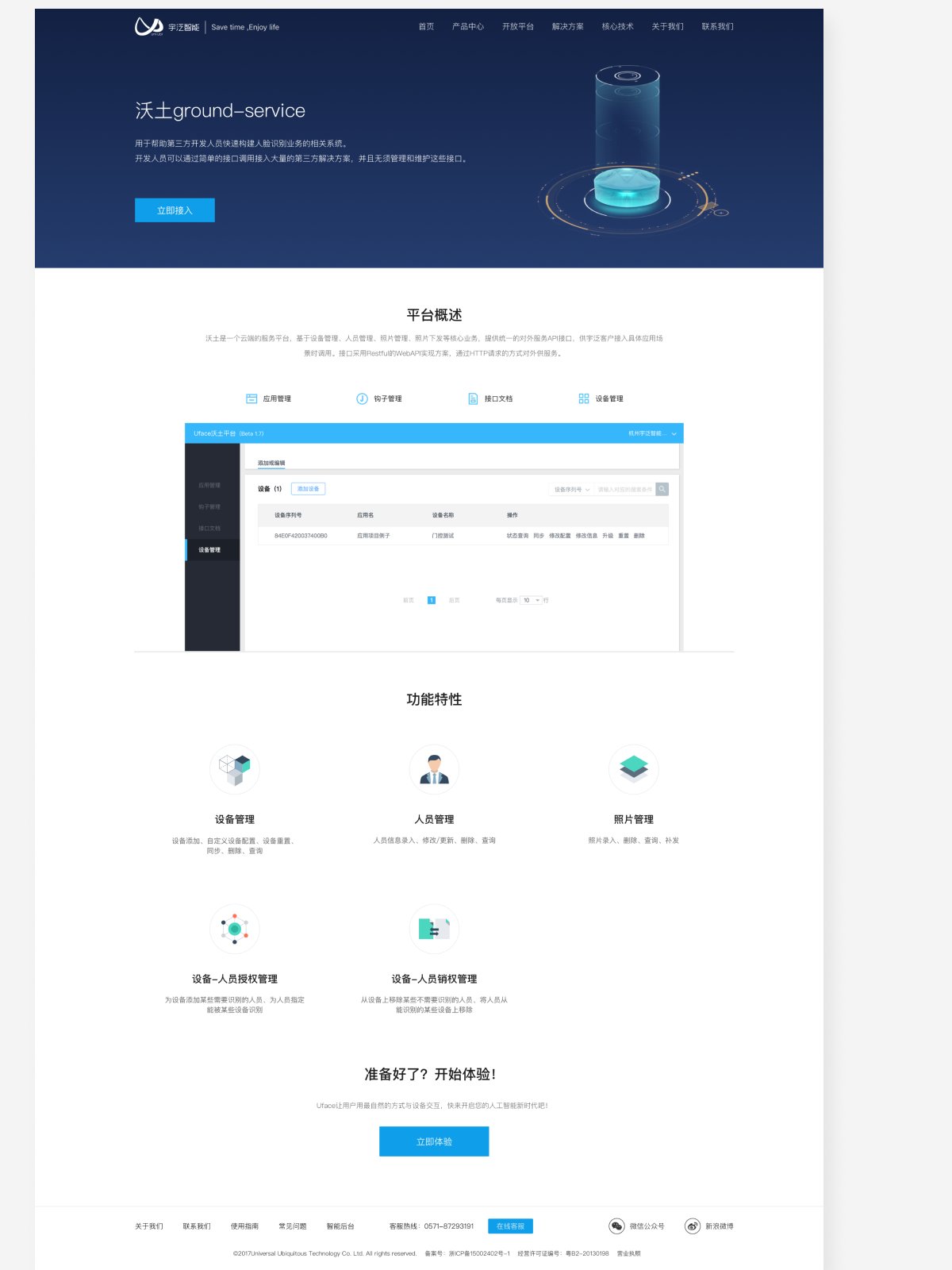
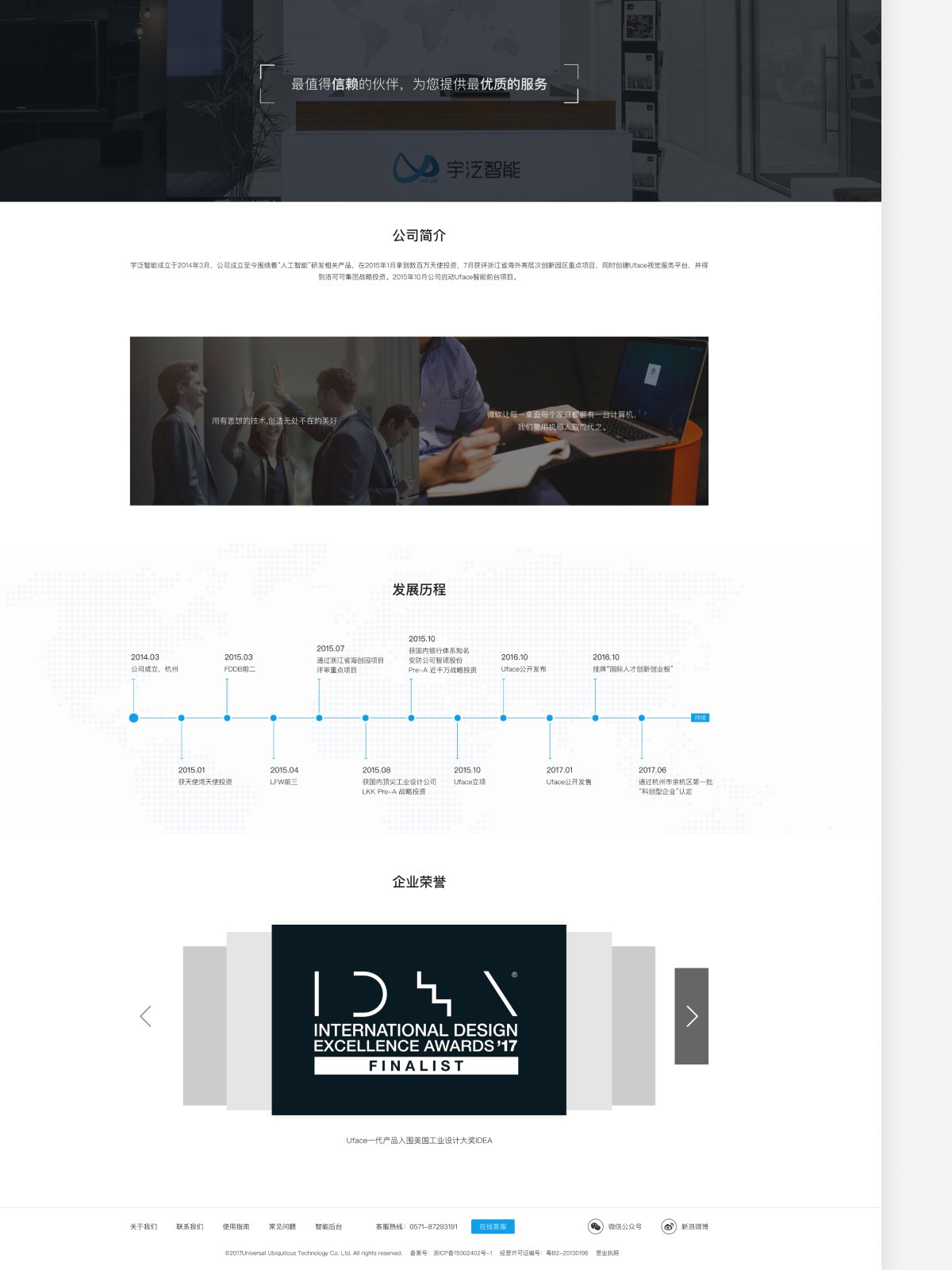
Primary entry points reorganized so users can reach products, scenarios, and technology faster.
Reusable content modules that scale across product, solution, and platform pages.
Light backgrounds, geometric structure, and blue accents establish a consistent tech voice.
Industry scenarios act as a bridge between abstract capabilities and concrete user needs.
The final website system gives Uni-Ubi a clearer and more scalable digital presence. By reorganizing the information architecture and applying a consistent visual language, the site helps users better understand the company's products, technologies, and business scenarios.
The modular structure also supports future content expansion — across product launches, platform updates, and industry solutions.
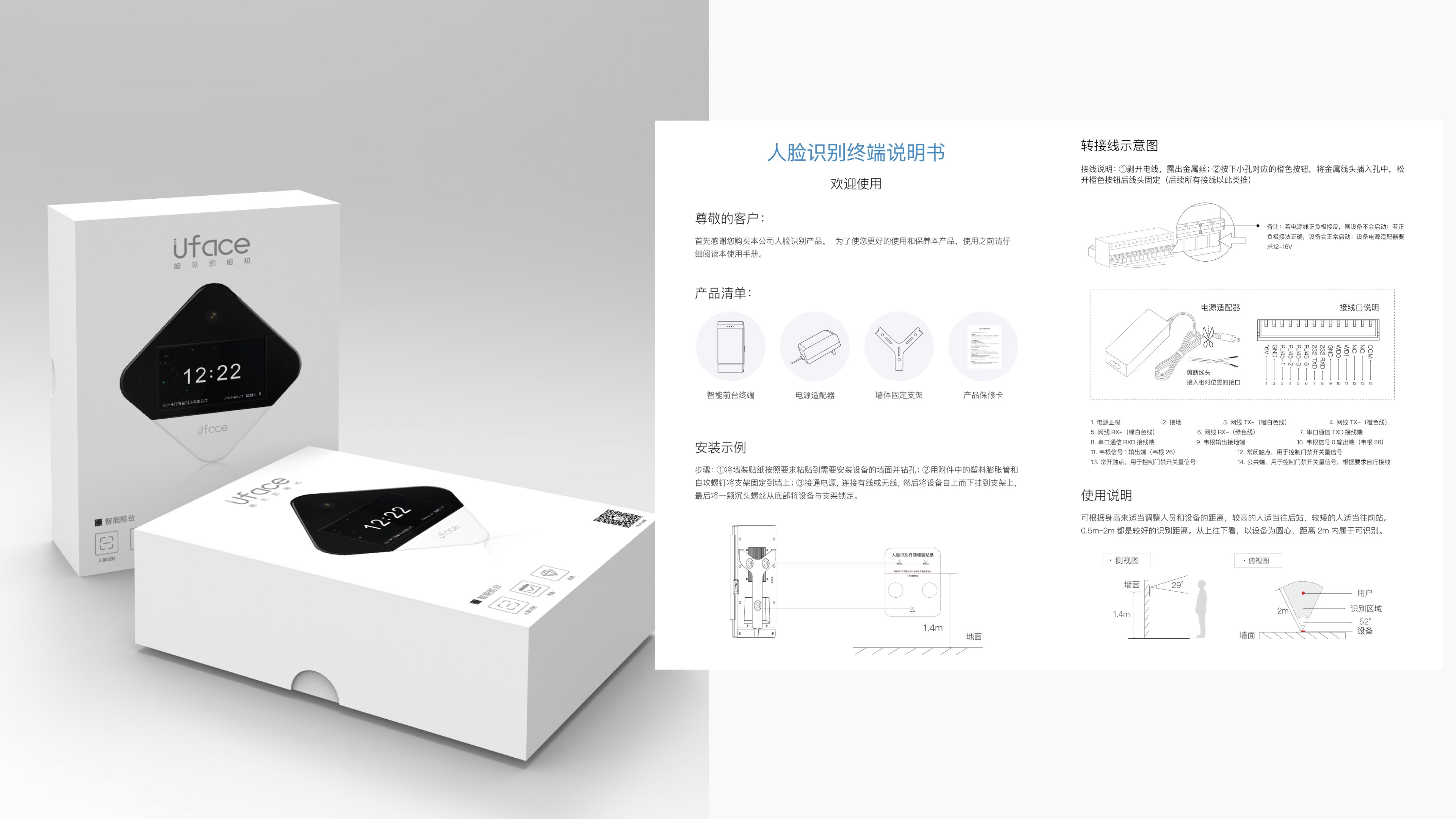
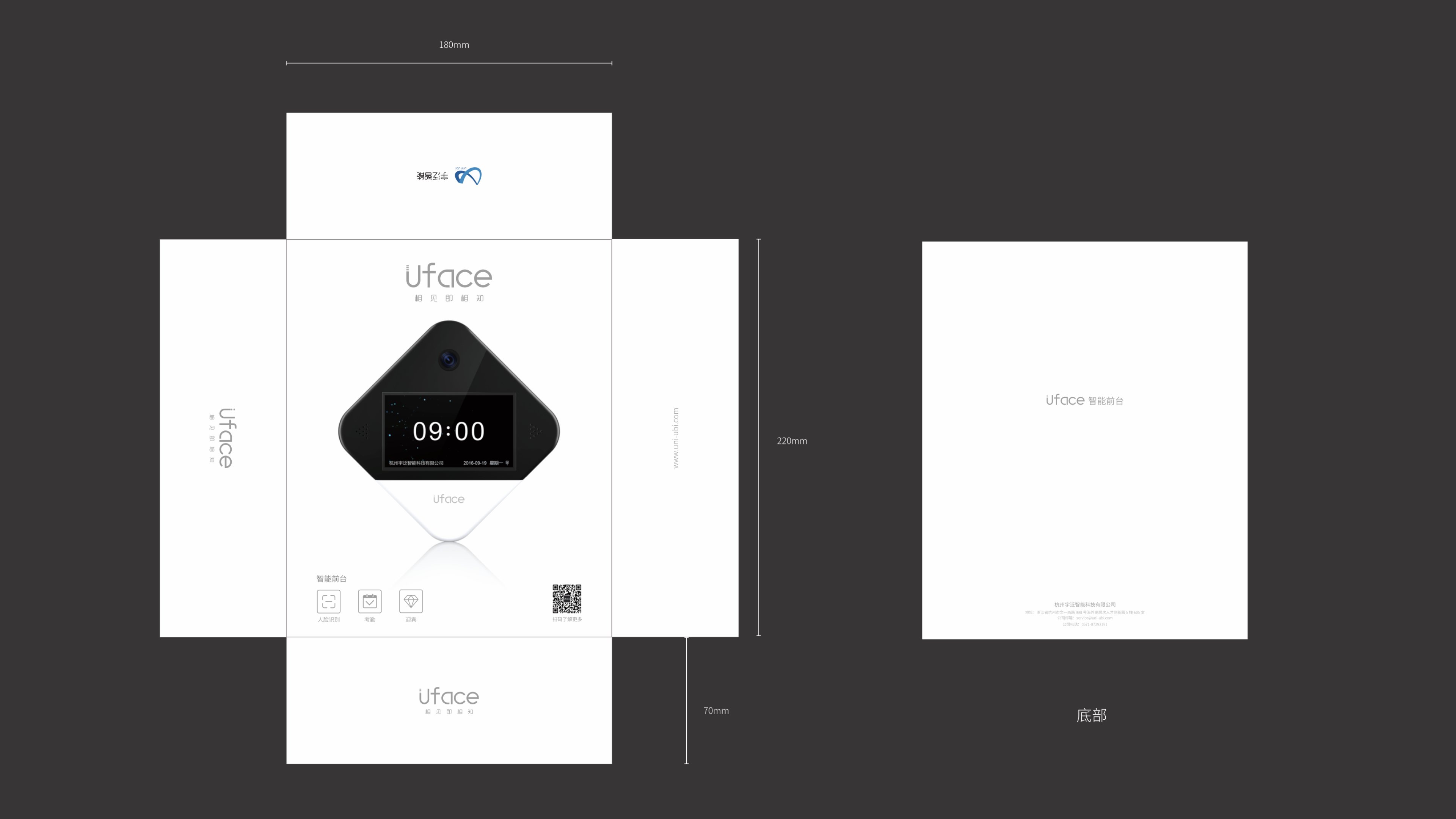
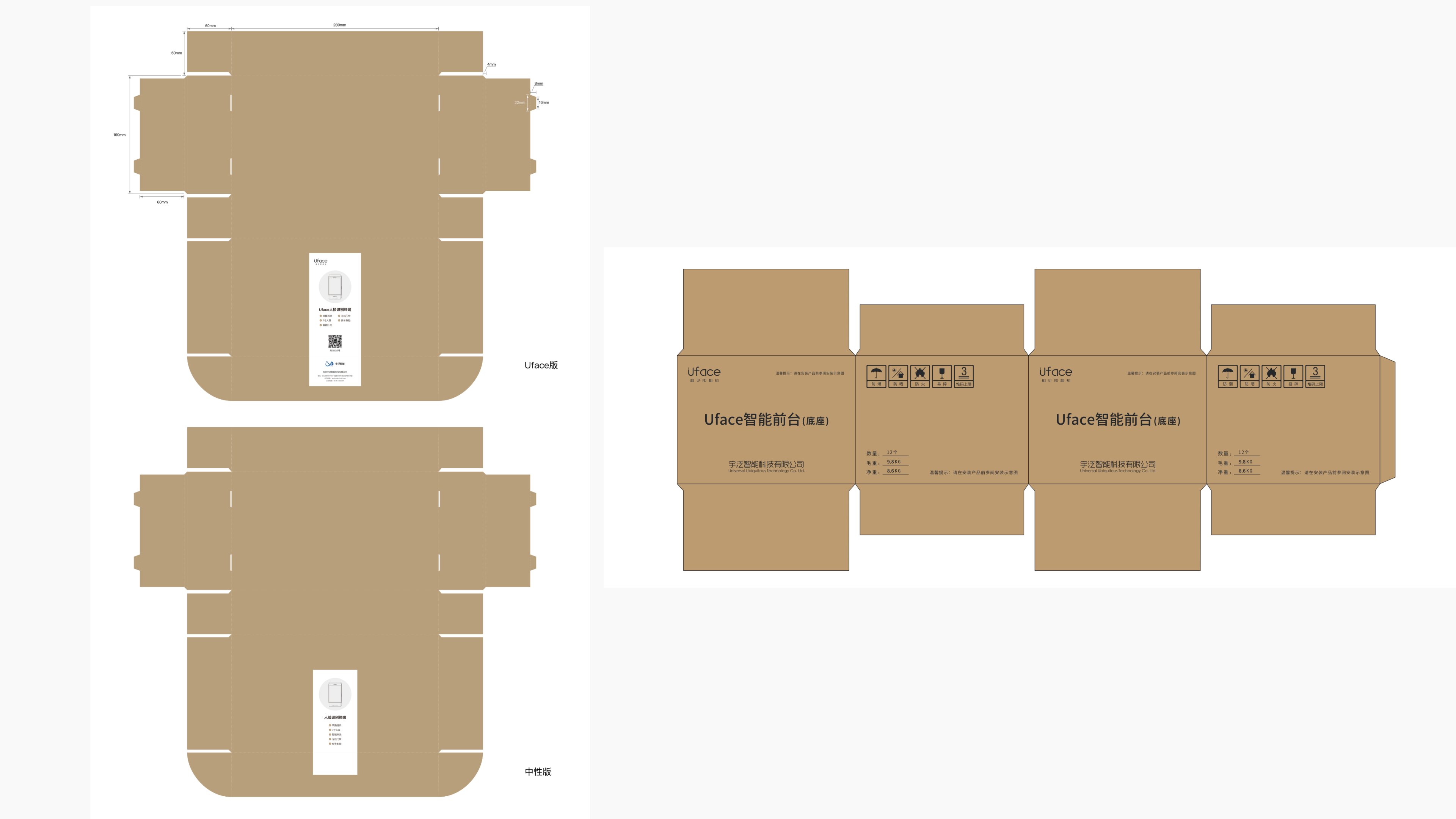
Brand language translated into the physical world, surface graphics, structure, and the unboxing moment.
Designed for a facial recognition access-control device, this packaging system focuses on clarity and trust — the clean white box, restrained graphics, and product-centered layout create a professional technology impression, while the instruction sheet simplifies setup through organized diagrams and a clear visual hierarchy. Together, the packaging and manual extend Uface’s minimal brand identity into a complete user-facing experience.